.jpg)


Multi-entity reporting consolidates financial data from multiple subsidiaries, divisions, or business units into unified reports that provide a complete view of organizational performance. This process requires standardizing data, eliminating intercompany transactions, converting currencies, and automating workflows to deliver accurate, audit-ready financials.
Finance teams managing multiple entities face a recurring challenge: pulling financial data from different ERPs, normalizing accounts, eliminating intercompany transactions, and building consolidated reports that leadership can trust. The process typically involves spreadsheets, manual exports, and formulas that break when entities are added or accounting periods change.
Multi-entity reporting isn't just about generating numbers. It's about creating a single source of truth across subsidiaries, divisions, and geographies so finance leaders can make informed decisions, maintain compliance, and close the books faster. When reporting is fragmented across systems, errors multiply, and audit readiness suffers.
Modern finance teams are moving away from spreadsheet-based consolidation toward automated platforms that unify data at the transaction level. This shift eliminates manual work, reduces errors, and provides real-time visibility into group performance without disrupting existing ERP systems.
This guide explains what multi-entity reporting is, the challenges finance teams face when consolidating across entities, and how automated platforms handle consolidation, currency translation, and audit trails without requiring spreadsheet work.
What Is Multi-Entity Reporting?
Multi-entity reporting consolidates financial data from multiple legal entities, subsidiaries, or divisions into unified financial statements. These reports provide leadership with a complete view of organizational performance across all business units, regardless of which systems they use.
Organizations with multiple entities maintain separate general ledgers for each subsidiary. Multi-entity reporting brings this data together to produce consolidated Profit & Loss statements, Balance Sheets, and Cash Flow reports at the group level. The process requires normalizing chart of accounts, eliminating intercompany transactions, translating currencies consistently, and maintaining complete audit trails.
Why Multi-Entity Reporting Is Complex
Finance teams dealing with multi-entity reporting face challenges that go far beyond basic data aggregation. The complexity stems from disconnected systems, inconsistent processes across geographies, and the technical requirements of producing audit-ready consolidated financials. Understanding these challenges helps explain why spreadsheet-based consolidation eventually breaks down as organizations grow.
Fragmented Systems and Data Sources
Most organizations run different ERPs across entities. One subsidiary uses NetSuite, another runs QuickBooks, and a third operates on Sage. Each platform structures its chart of accounts differently and exports data in various formats.
Finance teams spend hours manually exporting data, mapping accounts to a standardized structure, and wrangling inconsistent formats. When one entity changes its accounting structure mid-year, the entire consolidation model breaks.
Intercompany Transactions and Eliminations
Entities within the same organization often transact with each other. These intercompany transactions create revenue and expenses that appear in individual books but shouldn't appear in consolidated reports.
Teams in different countries or business units can't always coordinate perfectly when recording these transactions. Timing differences, currency mismatches, and recording errors create reconciliation headaches that delay the close.
You might also like: Intercompany Eliminations: Why It’s Time to Automate the Most Manual Step in Consolidation
Currency Translation and FX Rates
Organizations operating across multiple countries deal with multiple currencies. Consolidating requires translating everything into a common reporting currency using appropriate exchange rates.
Spreadsheet-based currency translation introduces formula errors and inconsistent rate application. Finance teams struggle to maintain accurate translation schedules and document methodology consistently.
Audit Trail and Traceability
Auditors need to trace consolidated numbers back to source transactions. When this process happens in spreadsheets, traceability disappears. Version control becomes impossible when multiple people touch the file, formulas get overwritten accidentally, and the connection between a consolidated figure and its underlying detail is lost.
How Multi-Entity Reporting Works in Modern Finance Platforms
Automated consolidation platforms solve these challenges by creating a unified data layer that connects to all entity systems, normalizes financial data automatically, and handles the technical complexity of it without manual intervention. These platforms shift multi-entity reporting from a painful month-end process to a continuous, real-time capability.
Unified Data Layer Across All Entities
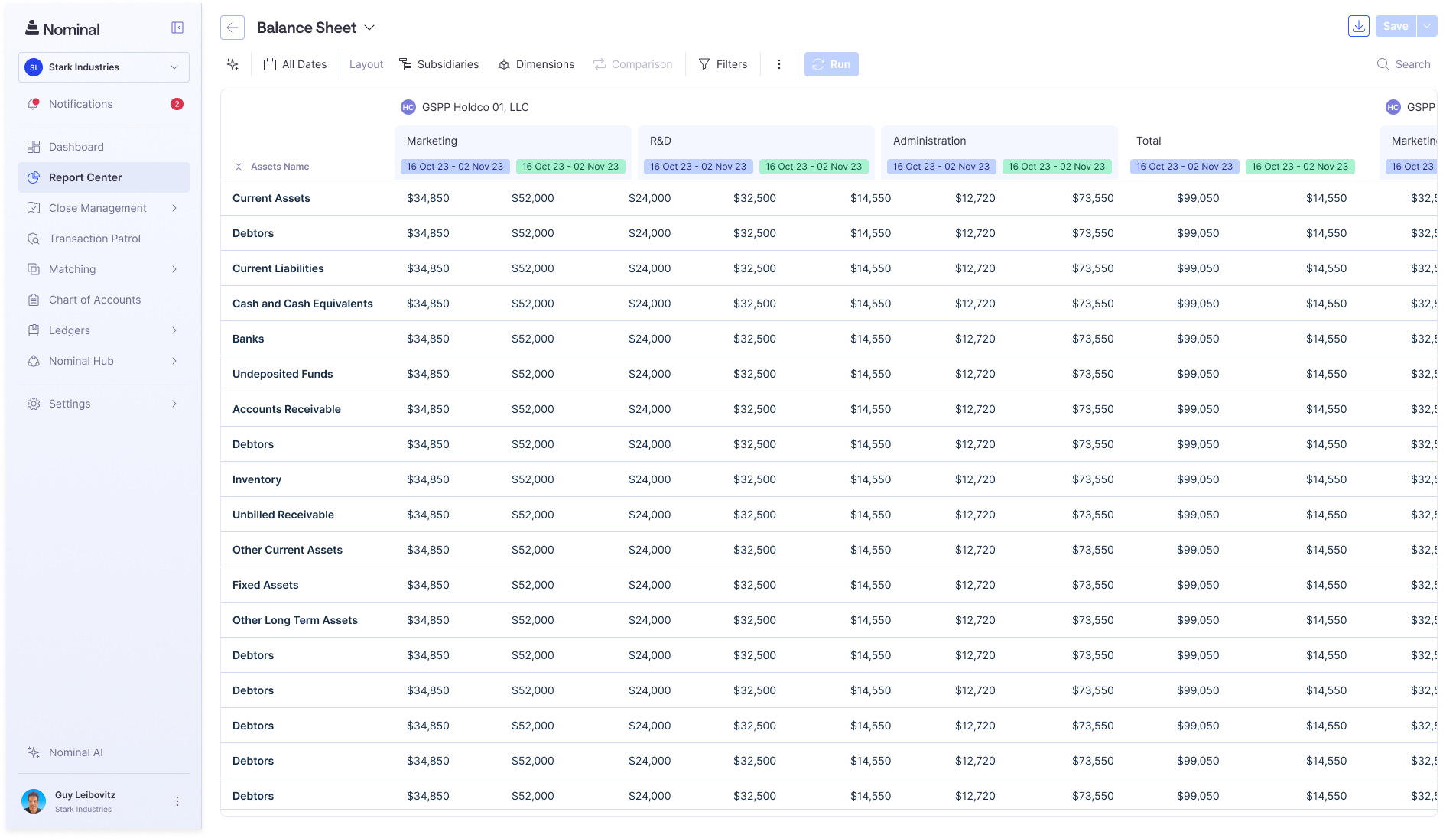
Modern platforms integrate multiple ERPs into a single financial model. These systems connect directly to each entity's general ledger and pull transaction-level detail automatically.
The platform normalizes chart of accounts by mapping entity-specific accounts to a common reporting structure. This normalization happens once during setup and applies automatically to all future periods.
Automated Consolidation and Eliminations
Consolidation platforms handle intercompany matching and elimination entries automatically. The system identifies transactions between related entities and generates elimination entries without manual intervention.
Finance teams can see consolidated results at any point during the month, not just after close. The platform maintains complete documentation of every elimination with full audit trails.
Recommended read: Consolidation Agents in Finance and Accounting: Automating the Multi-Entity Close
Currency Translation Applied Consistently
Automated platforms apply currency translation rules consistently across all entities. Finance teams configure their translation methodology once, and the system applies these rules automatically to all future consolidations.
When period-end rates are finalized, finance teams update rates once and every translated amount recalculates automatically. The platform supports multiple reporting currencies simultaneously.
Drill-Down and Audit Readiness
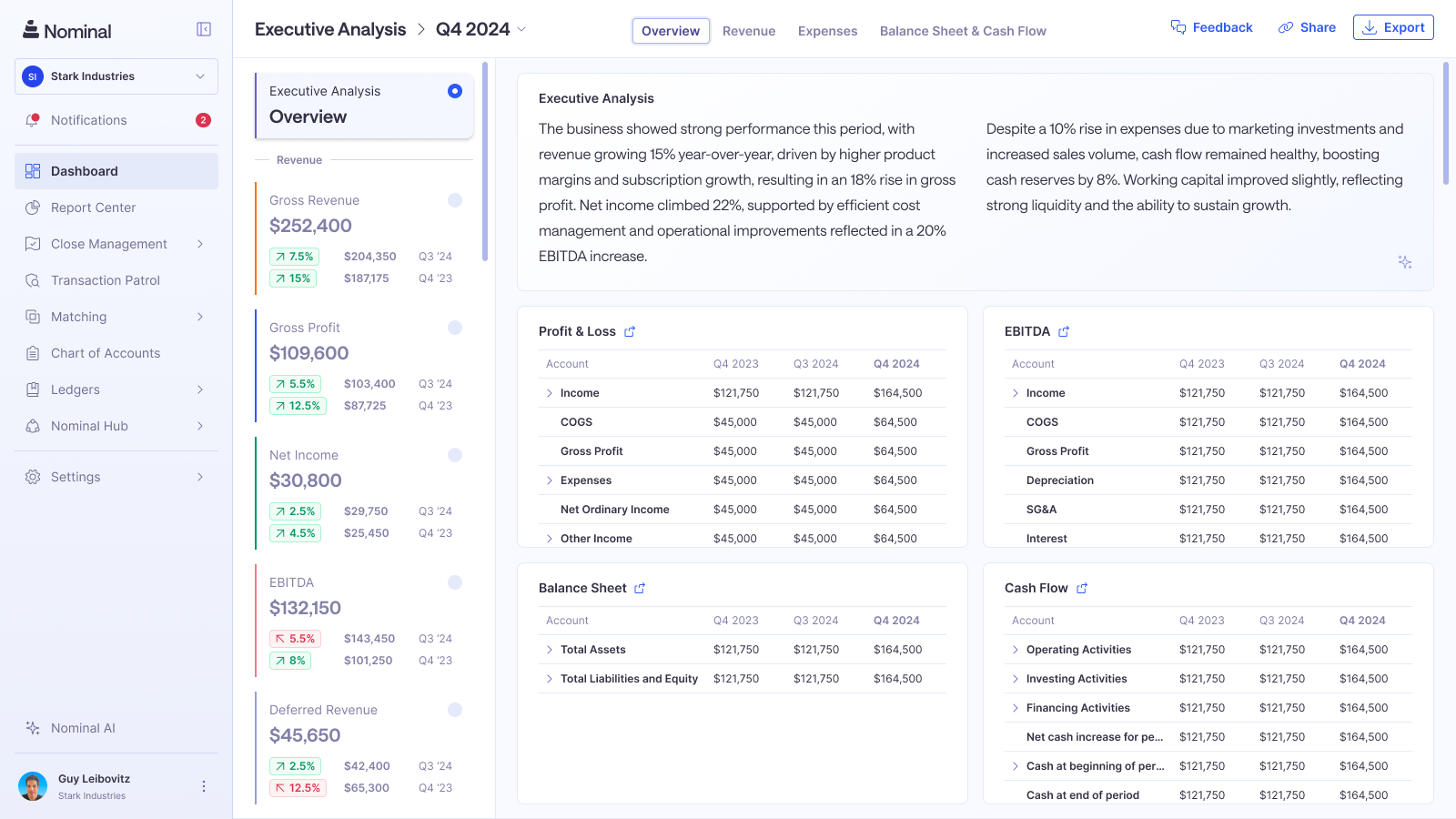
Every consolidated number connects directly to its source transactions. Finance teams and auditors can click any figure and drill down to see which entities contributed, what eliminations were applied, and which transactions make up the final number.
This traceability accelerates audits. Finance teams answer auditor questions instantly by showing the exact path from source transaction to consolidated result.
How Nominal Approaches Multi-Entity Reporting Differently
Traditional ERP reporting handles individual entities well but struggles with multi-entity consolidation. Most ERPs provide entity-level financial statements without the ability to consolidate across multiple entities or integrate data from other systems. Finance teams end up exporting data and rebuilding consolidations in spreadsheets every period.
Nominal's approach centers on transaction-level visibility rather than summary data. By building a shadow ledger that captures every transaction from every ERP, Nominal provides the granular access needed for accurate multi-entity reporting. This architecture allows finance teams to drill from any consolidated number down to the individual journal entries that comprise it.
The platform connects to NetSuite, QuickBooks, Sage, and custom ERPs simultaneously without requiring entities to change how they record transactions. Nominal works within existing processes rather than forcing process changes, recognizing that teams in different countries can't always coordinate perfectly on timing or methodology.
What makes it unique is the combination of three capabilities working together: a general ledger that operates at the transaction level, task management that provides oversight during consolidation, and agents that automate the manual work of matching, eliminating, and reconciling. This closed-loop system allows organizations to scale revenue while keeping G&A costs under control.
How Finance Teams Use Multi-Entity Reporting to Close Faster
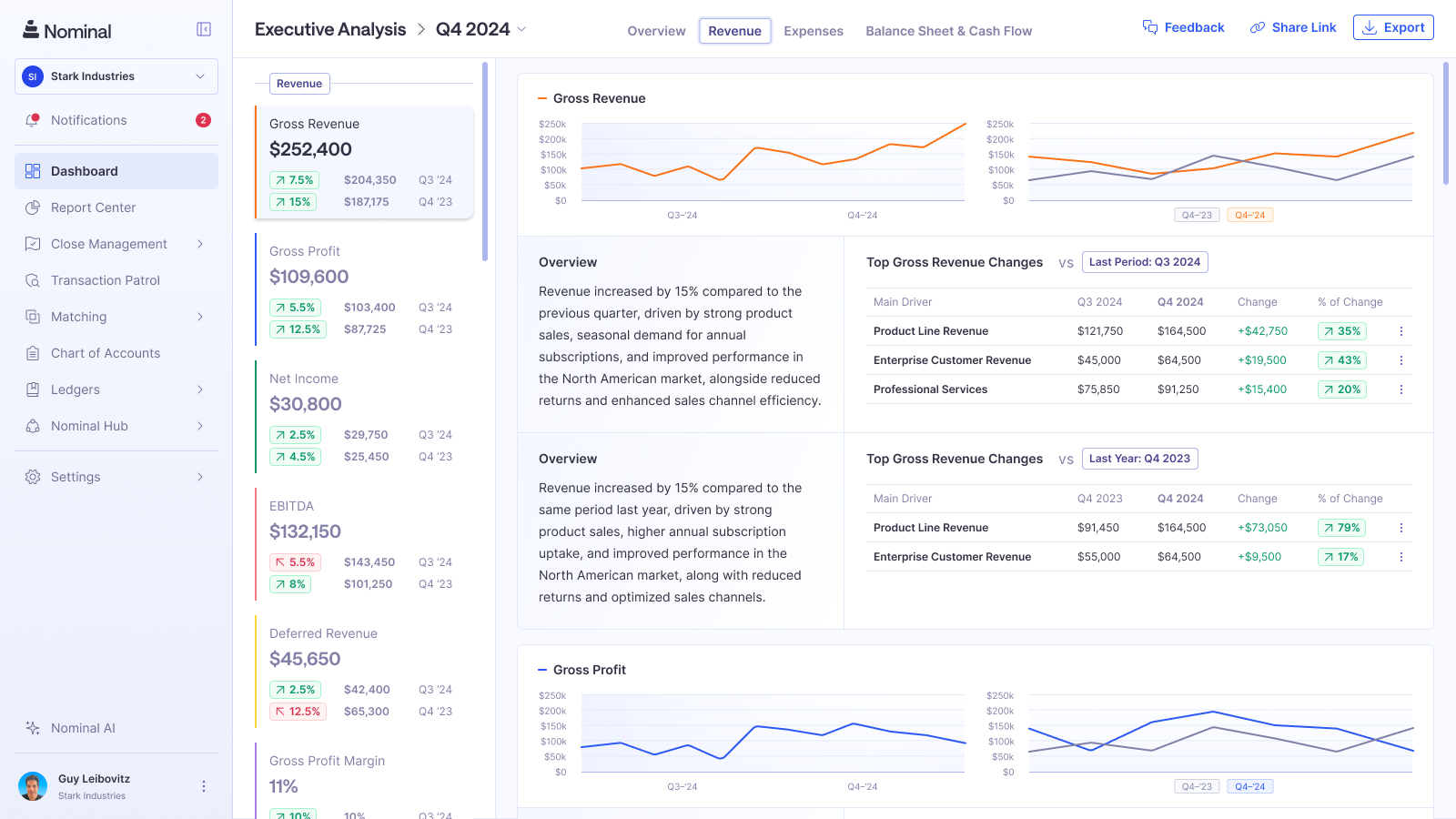
Organizations implementing automated multi-entity reporting eliminate days from their reporting cycle. What previously took manual work now happens automatically, allowing finance teams to close faster and focus on analysis instead of data assembly.
Spreadsheet reliance drops significantly. Finance teams no longer maintain complex workbooks or fix broken formulas. The consolidation platform becomes the single source of truth for group-level reporting.
Audits become faster with complete drill-down capability and built-in audit trails. Finance teams spend less time answering follow-up questions and preparing supporting documentation.
When consolidation runs automatically, controllers and managers gain time to analyze results, identify trends, and provide insights that drive decisions. This shift allows organizations to scale revenue while keeping G&A costs under control.
Moving Beyond Spreadsheet Consolidation
Multi-entity reporting transforms from a painful month-end task into an automated, real-time capability when organizations move beyond spreadsheets toward modern platforms. The combination of transaction-level access, automated eliminations, consistent currency translation, and complete audit trails eliminates manual work while improving accuracy and control.
Finance teams managing multiple entities no longer need to choose between speed and accuracy. Automated platforms deliver both, providing real-time visibility into group performance while maintaining the rigor and documentation that auditors require.
See how Nominal automates multi-entity reporting across multiple ERPs with transaction-level visibility, automated eliminations, and complete audit trails. Book a demo to explore how your finance team can close faster and eliminate spreadsheet consolidation.