

Q4 2025 marked a significant milestone in Nominal's journey, with substantial improvements across every major product area. We've enhanced our AI agents, streamlined workflows, and delivered capabilities our customers have been asking for. This quarter's releases represent our commitment to making month-end close faster, more accurate, and more intelligent.
Feature Highlights
1. GL Transaction Matching Overview
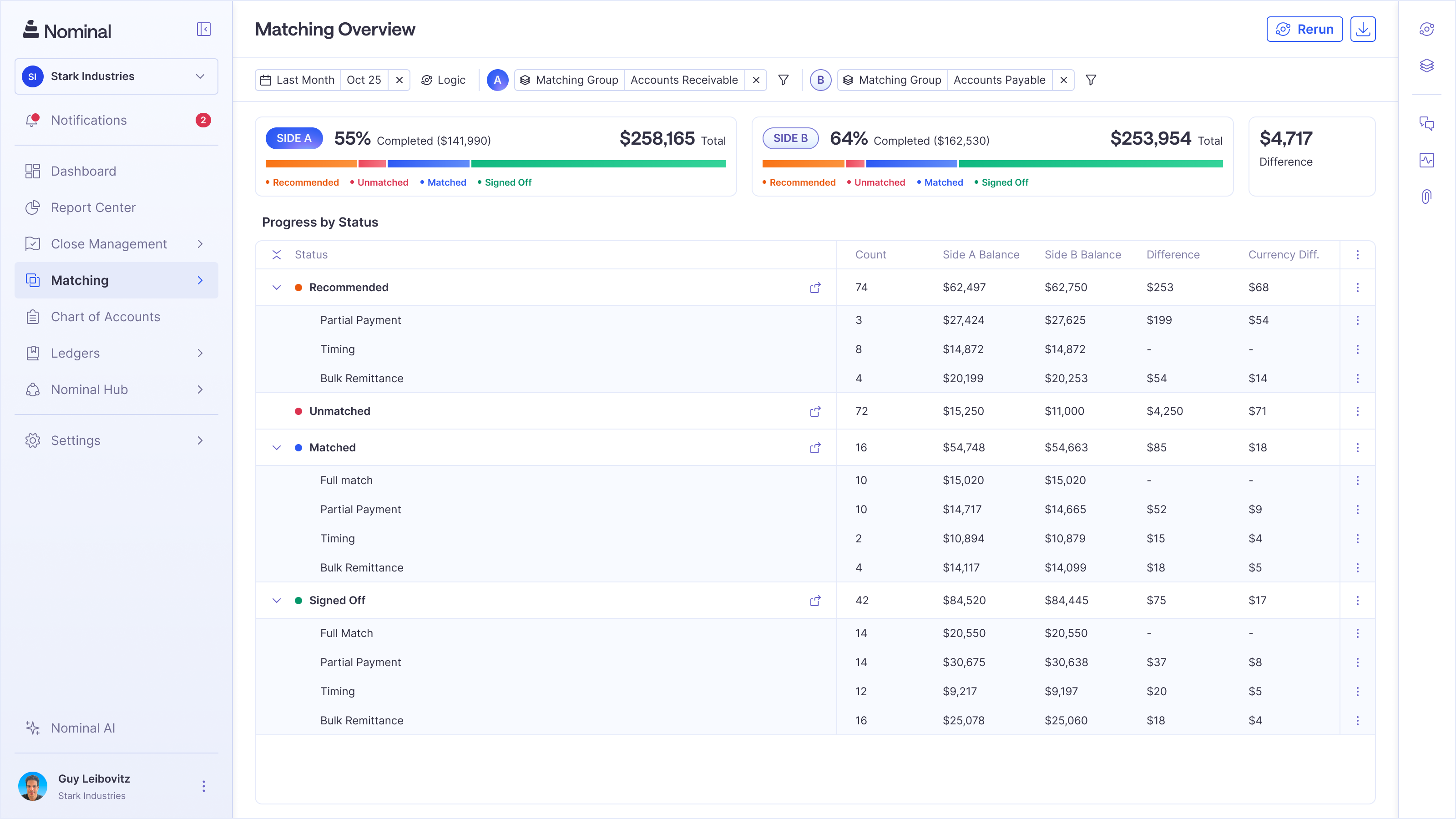
Gain complete visibility into your reconciliation progress with our new Matching Overview dashboard. Instead of jumping between tabs to understand your matching status, you now have a single, comprehensive view that shows exactly where you stand.
What you get:
- At-a-glance reconciliation status across all matching stages
- Balance breakdowns by matching logic, showing Side A, Side B, and the balance difference (in the consolidation currency)
- Flexible filtering by date range, matching groups, accounts, subsidiaries, and dimensions
- One-click navigation to detailed views with filters preserved
This makes it easy to generate summary reports for reconciliation sign-off, monitor progress across different accounts and subsidiaries, and quickly identify what needs attention before you close the books. Whether you're performing intercompany reconciliation, clearing accounts, or any other matching exercise, the Overview gives you the control and visibility you need.
2. Transaction Matching Resolution Agents
Reconciliation doesn’t stop at identifying matches: you need to resolve discrepancies. Our new Resolution Agents complete the automation loop by generating journal entries automatically once you've determined how a discrepancy should be resolved.
How it works:
Nominal already supports opening tasks to investigate discrepancies and collaborate with your team. Resolution Agents are the final piece. Once you've concluded what the resolution should be, agents execute it automatically.
You can define resolution instructions in natural language, such as:
“Reverse all matched lines and post the balancing amount to the Inventory Variance expense account.”
Create multiple Resolution Agents for different scenarios, such as clearing account adjustments, timing differences, FX reconciliations, or any other resolution pattern your business requires.
While working through a match resolution task, simply select the appropriate agent. It executes your instructions, generates the journal entries, and updates the task: all with a complete audit trail.
The impact:
Your team focuses on investigating exceptions and making decisions. Resolution Agents handle the execution consistently and accurately. They’re integrated with Close Management tasks, making automated resolution a natural part of your standard close workflow.
3. Transaction Patrol – Now Production-Ready
Transaction Patrol, launched as an alpha in late Q3, is now a robust, production-grade anomaly detection system. Finance teams can proactively catch errors before they impact month-end close.
What’s new since alpha:
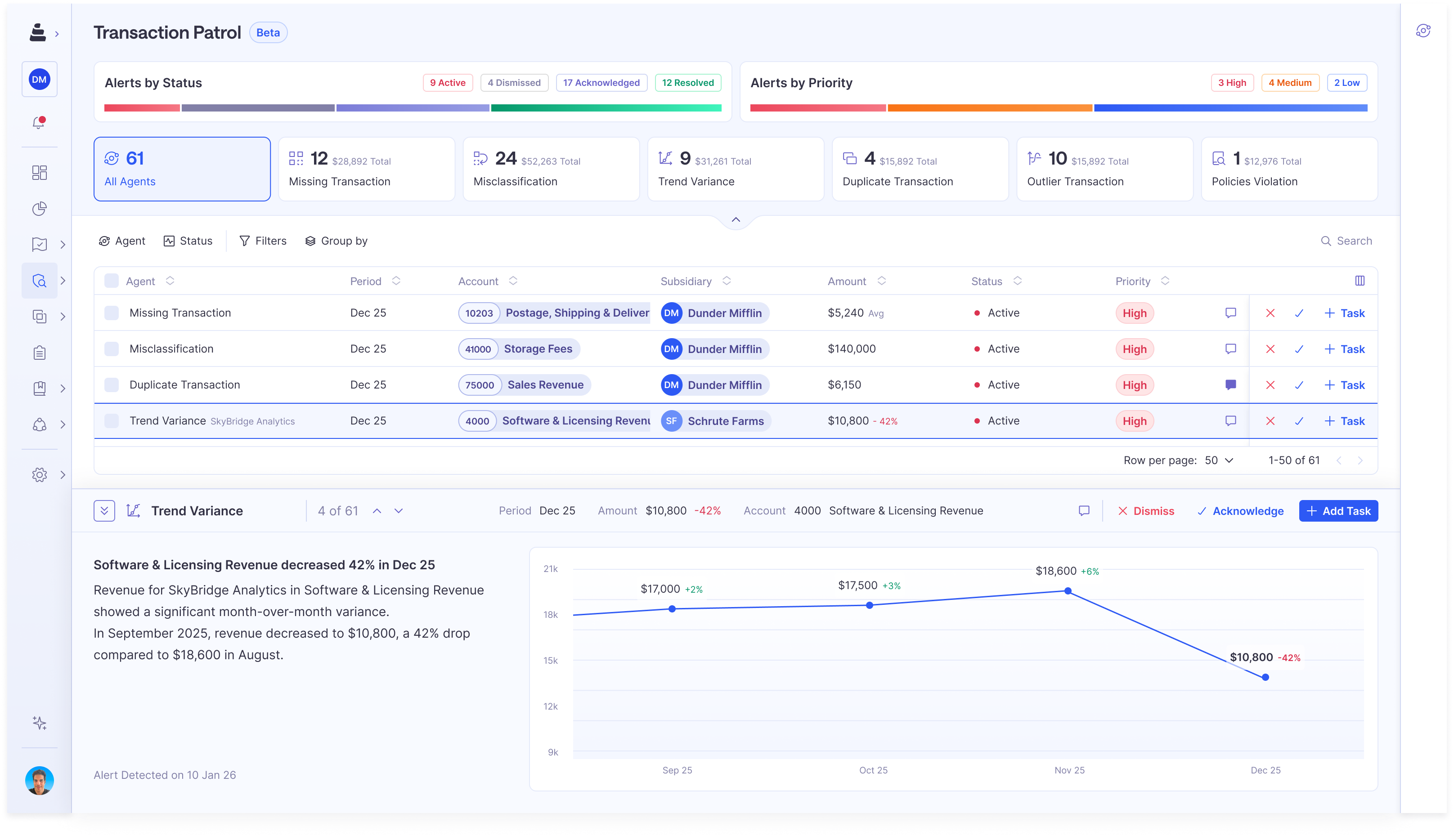
- Trend Variance Agent: Identifies significant changes in financial activity across vendors or custom dimensions
Example: “Total activity for Vendor X in Rent Expense increased by 25% from $50,000 to $62,500 in November 2025.” - Critic LLM for false positive reduction: A second-pass validation layer reviews Agent alerts before surfacing them to reduce noise
- Agent Configuration Page: Full control over which agents run, when they start, and what thresholds they use
- Performance improvements: Faster pattern detection and more accurate alerts
- Better UX: Sortable table, easy filters, clickable journal entries, and improved alert presentation
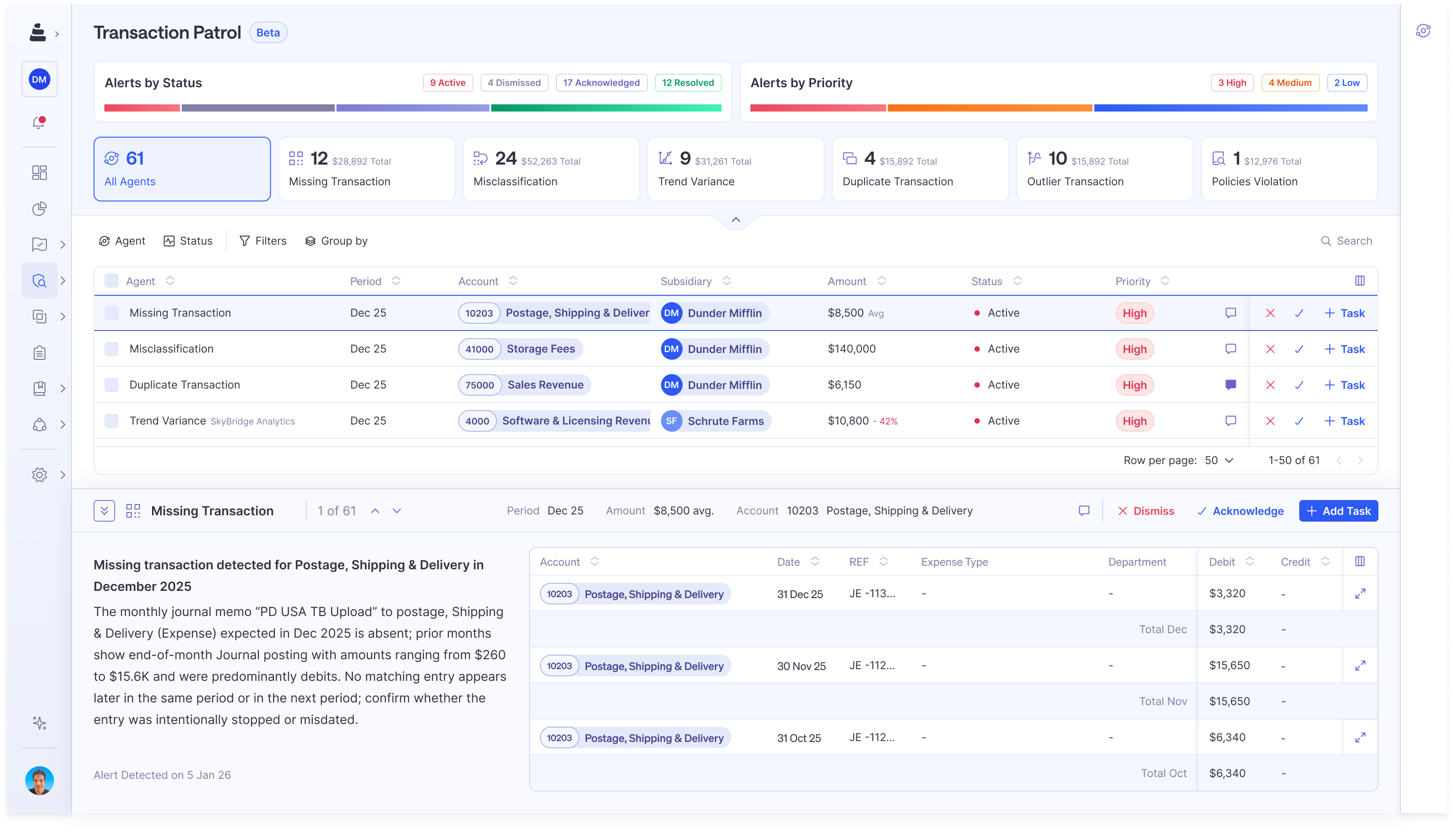
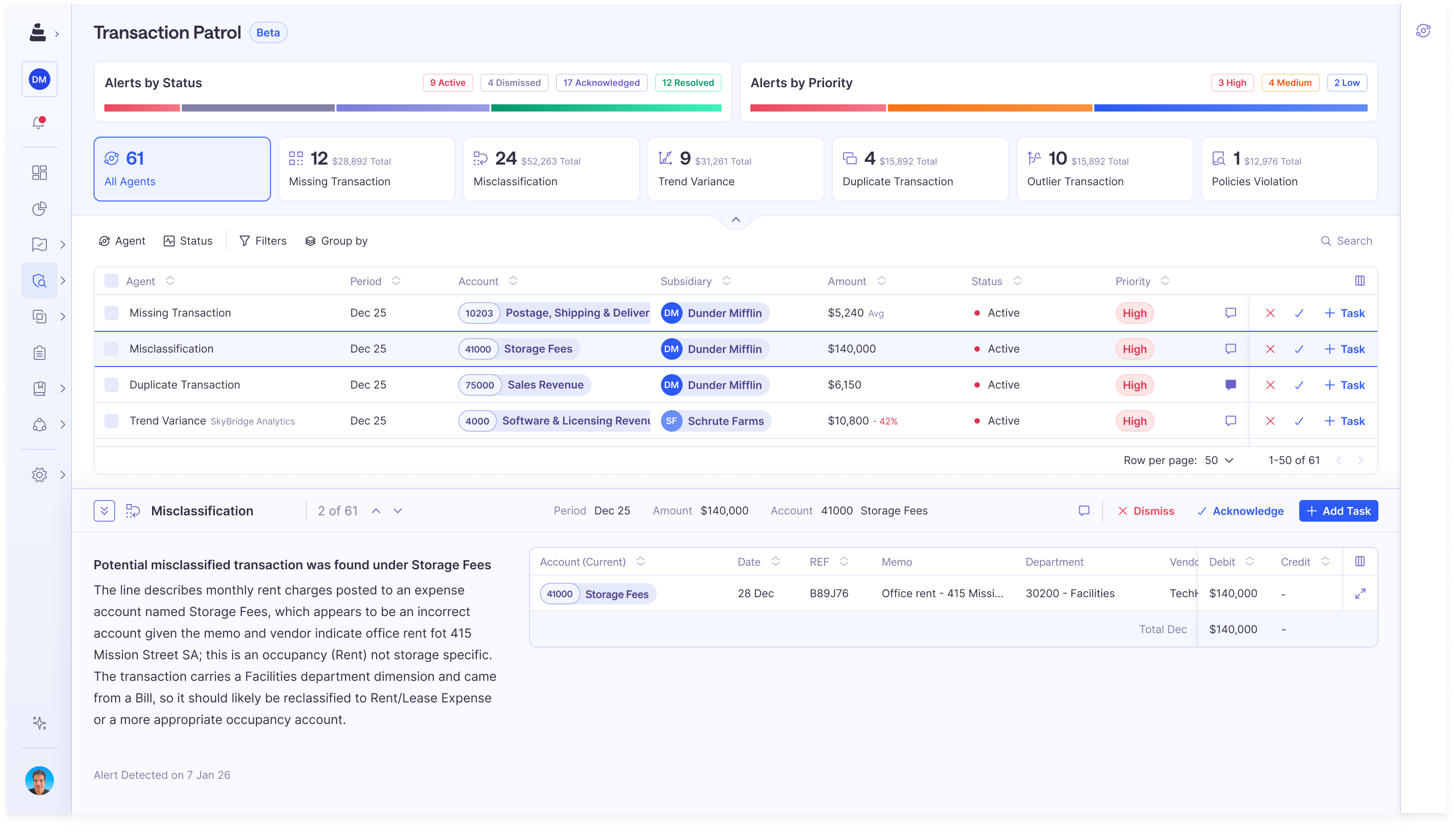
Transaction Patrol now includes multiple specialized agents such as Misclassification, Missing Transaction, and Trend Variance. Each is designed to catch a specific type of issue. You can enable or disable agents based on your priorities and configure them to match your business context.
Missing transaction alert details:
Misclassified transaction details:
Trend Variances agent:
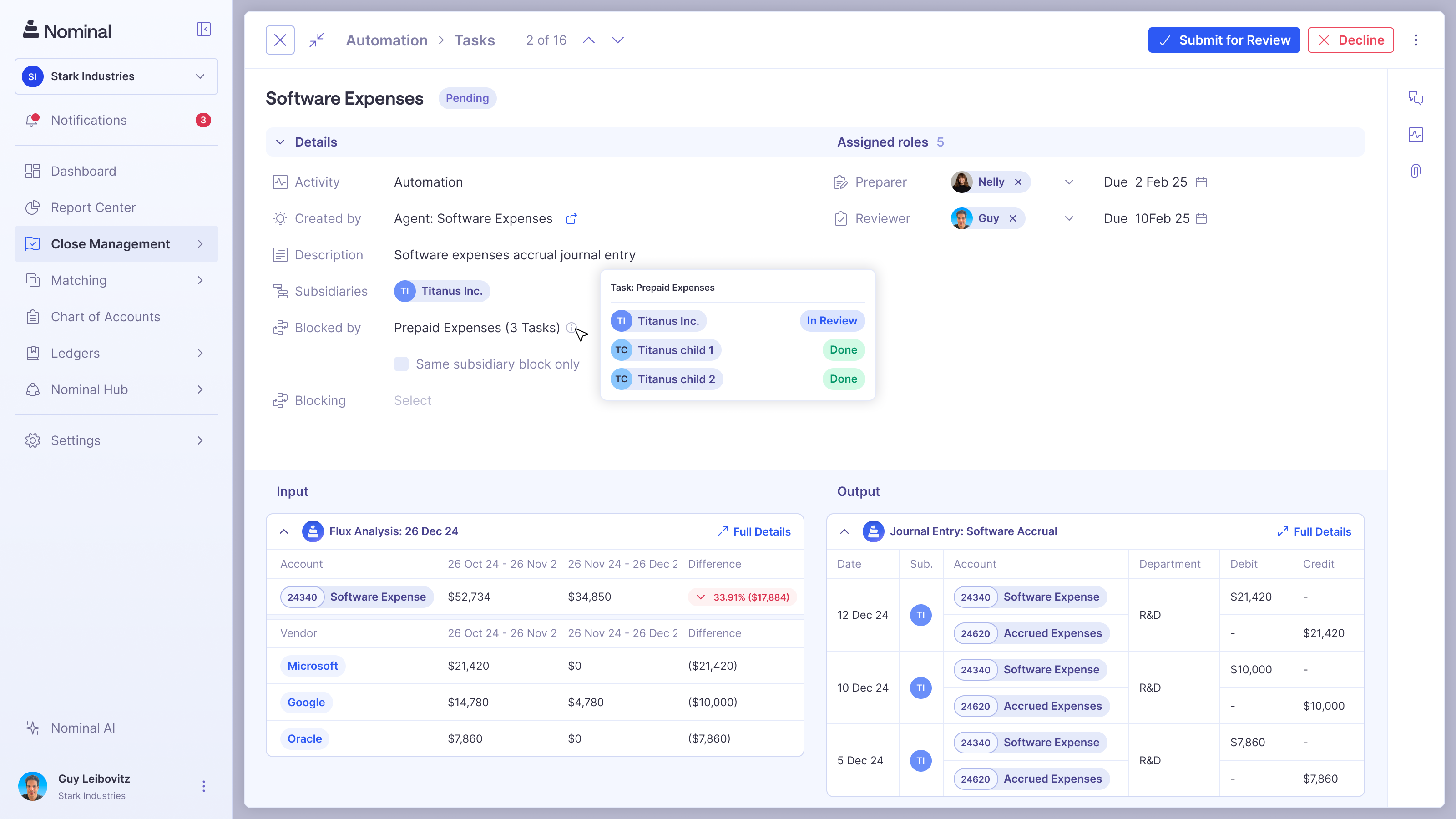
4. Task Dependencies in Close Management
Complex closes require tasks to follow a specific order. Our new Task Dependency feature ensures your team completes close activities in the right sequence, automatically blocking dependent tasks until prerequisites are met.
How it works:
When setting up task templates, you can designate which tasks must be completed before others begin. For example, consolidated reports can't be finalized until the subsidiary closes are signed off.
Dependencies work intelligently at the subsidiary level. If Task A blocks Task B but they’re in different subsidiaries, you can configure them so that only matching subsidiary instances block each other. This gives you the control needed for complex, multi-entity closes without introducing unnecessary bottlenecks.
Additional Enhancements
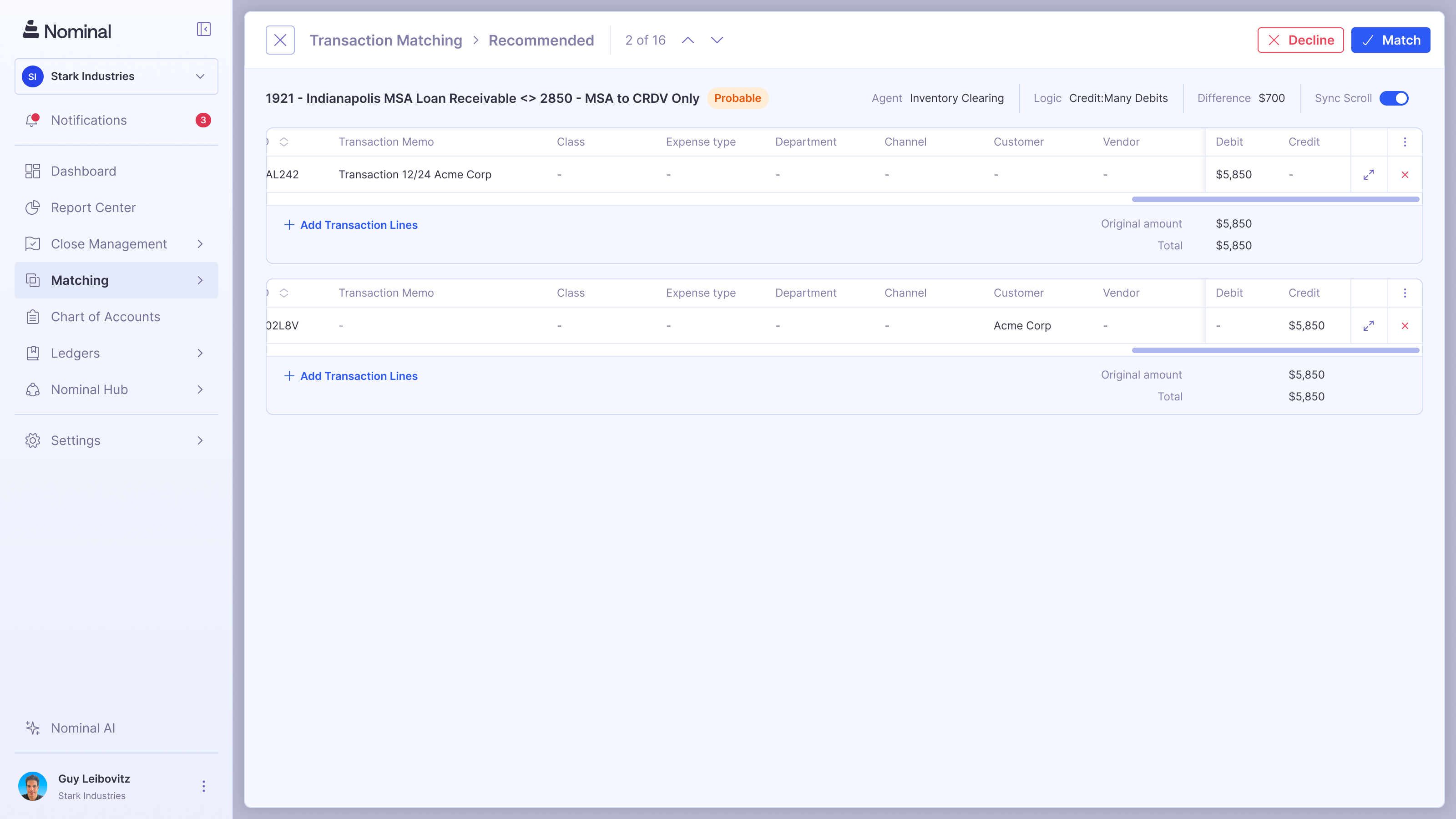
Transaction Matching
- One-sided match support: Clear unmatched transactions even when only one side of the transaction is available
- Quick sync: Faster data synchronization for large matching operations
- Match details with synced scroll: Improved UX when reviewing matched transaction details
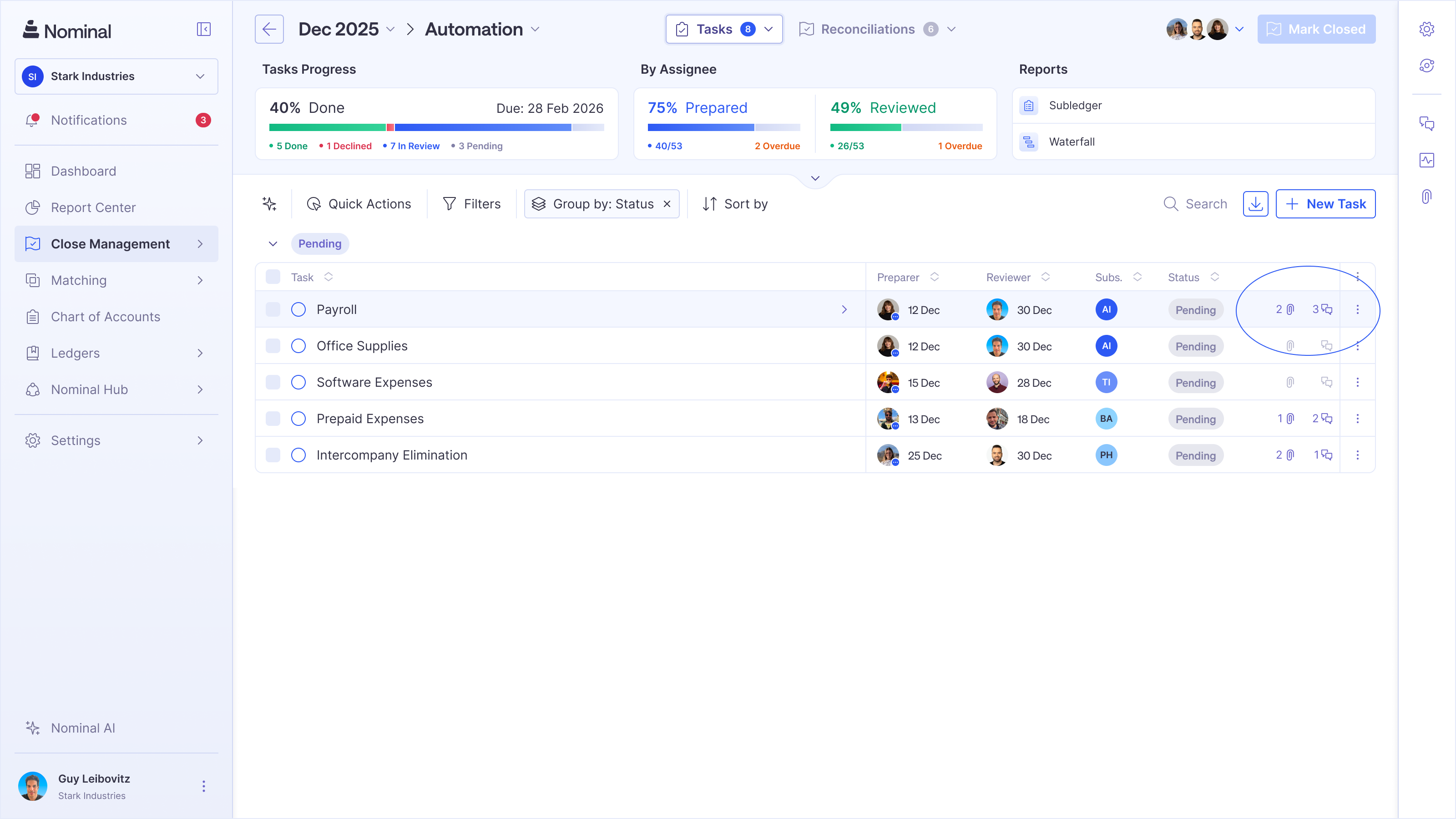
Close Management
- Slack integration: Get Close Management notifications directly in Slack
- New Activities View: Reorganized view for better subsidiary status tracking
- Comments Column: See comment counts at a glance in the tasks table
- Attachments Column: Quick visibility into which tasks have supporting documents
Flux Analysis
- LLM Migration to Anthropic: We switched the LLM engine we use to run Flux and now it is more accurate and concise explanations
- Custom Report Types: Added support for P&L, Balance Sheet, EBITDA flux report structures
.png)
- V3 Flux Agent Rollout: We now use the new flux analysis agent to run analysis for all customers
Platform Improvements
- Fiscal Year Support: Full support for shifted months fiscal years
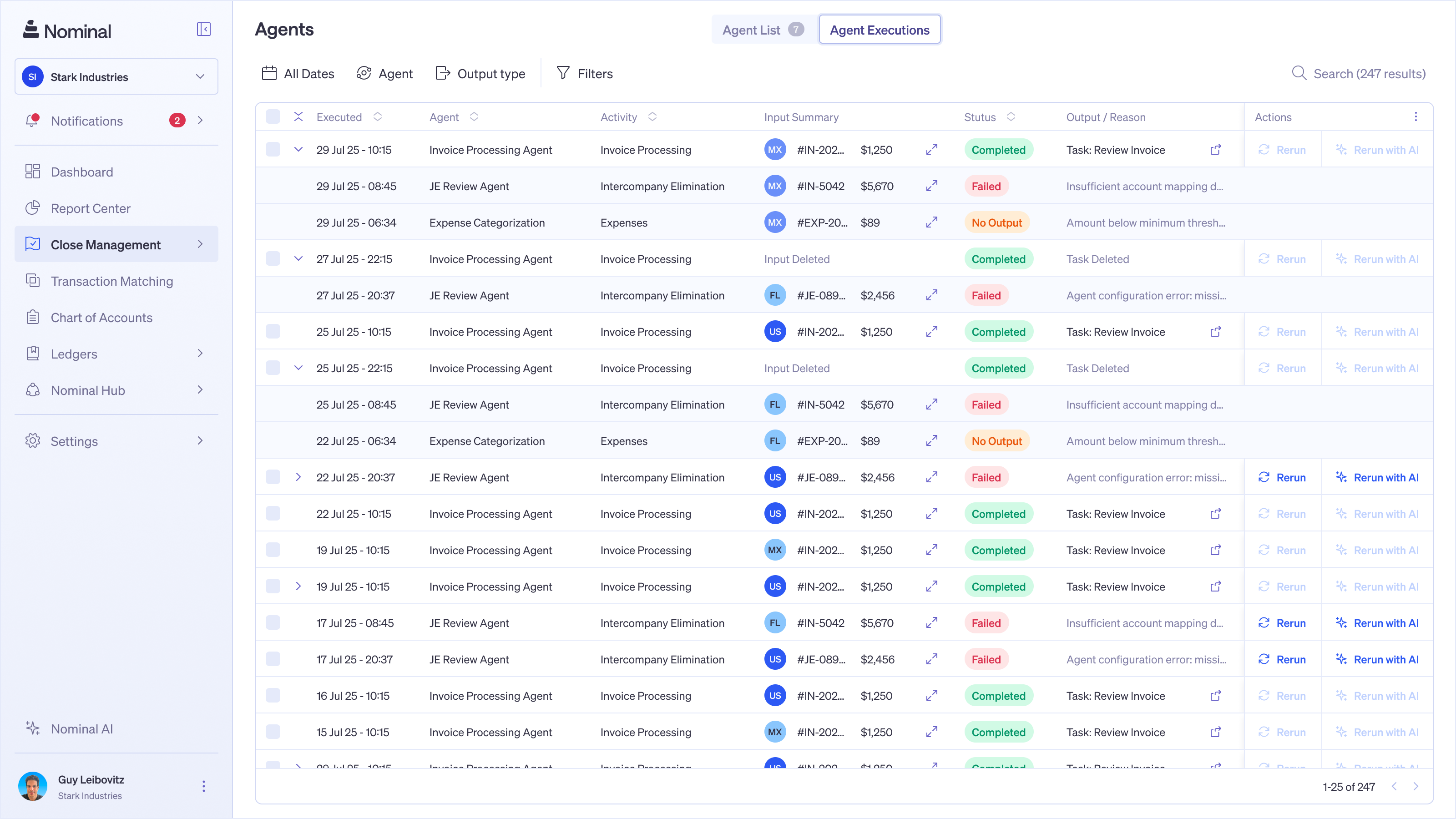
- Trigger Agent Executions Page: New visibility into automated agent runs
- Integration Enhancements: Improved reliability and performance across ERP connections
- New integrations: We added 5 new ERP integrations, bringing us to a total of 20 supported ERP integrations
- Performance improvements: Nominal is much faster and more responsive. If you feel otherwise, please let us know!
Looking Ahead
This quarter's releases represent our largest product update of 2025, with improvements touching every major workflow. As we head into 2026, we're continuing to invest in AI-powered automation, enhanced collaboration features, and deeper ERP integrations to make your close process even more efficient.
Questions about any of these features? Reach out to your customer representative to learn more about how these capabilities can streamline your close process.